Model & design
Develop aerodynamic models, system requirements and integration concepts.

Technology / Engineering in development
Developing a modular, automated wind-assisted propulsion system that connects aerodynamic design with the realities of commercial shipping.
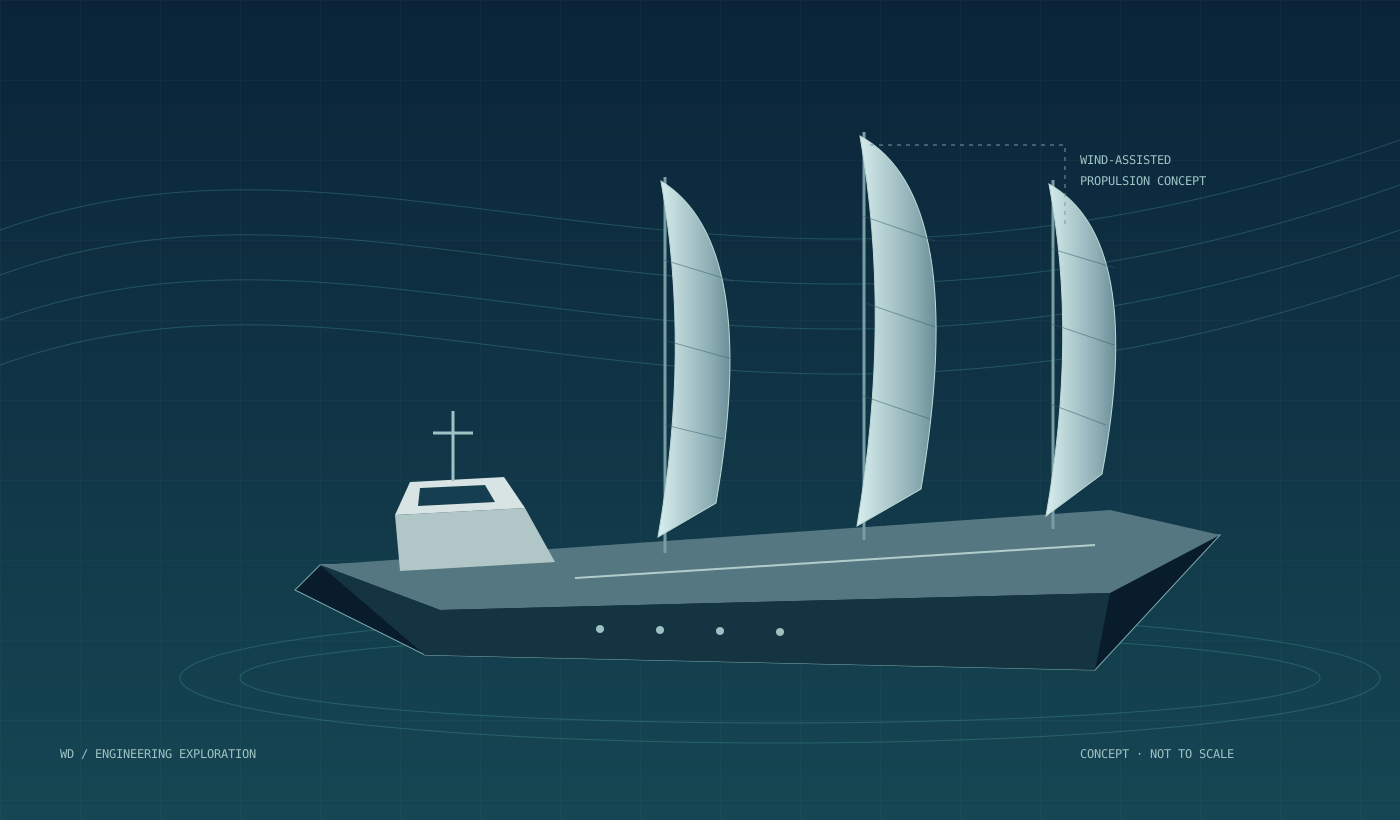
Functional concept only. Detailed mechanisms and control architecture under development.
01 / System architecture
The proposed sail architecture is being developed with modular installation and retraction in mind. The design process considers deck interfaces, stowage requirements, access for maintenance and compatibility with vessel operations.
02 / Aerodynamics & CFD
Computational fluid dynamics and aerodynamic analysis help explore sail geometry, operating conditions and interactions. Predictions will need to be compared with experimental evidence before performance claims can be established.
03 / Actuation, sensors & control
The control concept brings sensing and actuation together to manage sail operation as conditions change. Development will consider operator oversight, system monitoring and responses to abnormal conditions.
04 / Operational optimisation
Useful wind assistance depends on more than a sail in isolation. We intend to assess vessel speed, route, weather, propulsion interaction and operational constraints together.
05 / Development & validation
Our development approach connects simulation, mechanical design and experimental evaluation. No validated fuel-saving figures or commercial deployments are presented at this stage.
Develop aerodynamic models, system requirements and integration concepts.
Plan component and experimental testing to evaluate assumptions and model predictions.
Explore suitable vessel studies and potential pilot pathways with industry partners.
Future CAD renders, simulation results and test photographs will be added when available for publication.
A shared course forward
We welcome opportunities to collaborate with shipping companies, engineering partners, and research organisations.